
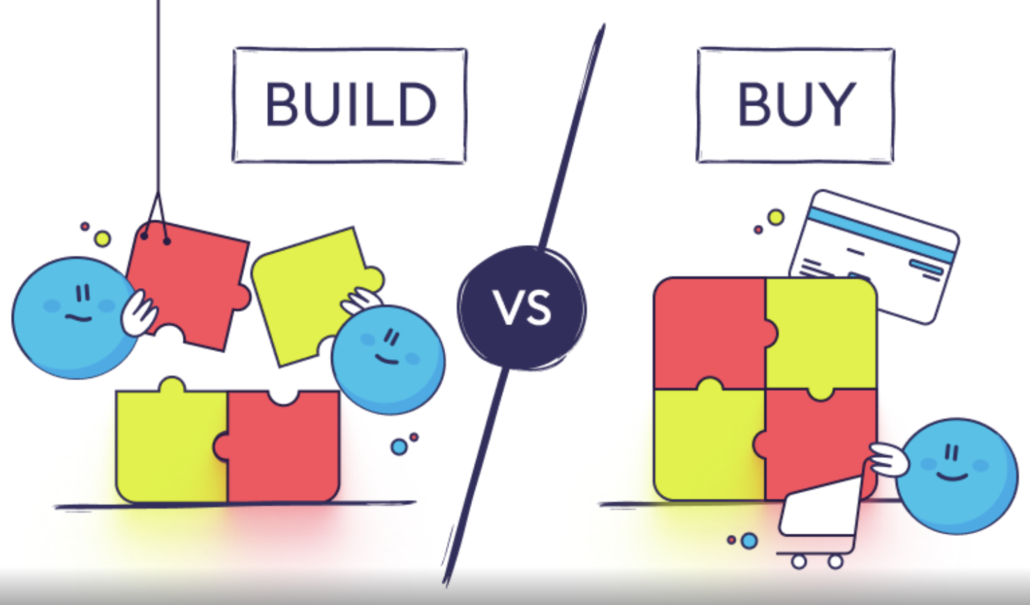
The AI agent build vs buy enterprise debate is one that most organisations are not having clearly enough – and it is costing them. Teams spend months building agent infrastructure from scratch, when that time should be going toward the workflows and domain logic that actually differentiate their business.
There is a trap that enterprise AI programs fall into, and it happens fast.
A developer gets access to a capable AI coding tool. Within a day, they have a working AI agent. Within a week, they have a multi-agent workflow with tool calls, integrations, and business logic. Leadership sees the demo and the decision is made: we will build this ourselves.
Six months later, that same team is not building new capabilities. They are maintaining what already exists, patching workflows, untangling integrations, and debugging agent behaviour that made sense in version one but breaks in version three. The AI programme has stalled – not because the technology failed, but because the team built the wrong layer.
This is one of the most common mistakes we see enterprises make when deploying AI agents at scale. And it is entirely avoidable.
The two layers every enterprise AI programme has
When you strip an enterprise AI agent system down, it has two distinct layers.
The first is infrastructure. This includes orchestration logic, session and state handling, guardrail enforcement, integration scaffolding, audit logging, access controls, observability, and lifecycle management. It is genuinely complex to build. It is expensive to maintain. And it is almost identical across every enterprise deploying agents at scale.
No organisation gains competitive advantage from building their own session manager. They just spend the engineering hours.
The second layer is where competitive advantage actually lives: the architecture of how agents work inside your specific business. The use cases. The workflow logic. The exception handling. The escalation paths. The risk rules. The policies that determine what an agent can access, when it should act, and when a human needs to step in.
This layer cannot be outsourced to a coding tool or handed off to a vendor. It requires domain knowledge, institutional understanding, and genuine business judgment. It is work only your people can do.
The mistake most enterprises make is spending their best engineering talent on the first layer, when that time should be going entirely into the second.
Where custom-built infrastructure breaks down
The problems rarely appear immediately. Early builds feel fast. Components come together quickly. The proof of concept impresses.
The gaps surface as the system grows.
Orchestration logic ends up scattered across components that were never designed to coordinate. Handoff contracts between agents are never formally defined, so each developer assumes what the next agent expects. State gets managed inconsistently, leading to race conditions and duplicated actions that only appear in production. Guardrails get implemented differently by different teams, so the same enterprise policy might exist in three places enforced three different ways. When one agent fails, there is no blast-radius containment, and the failure cascades.
Every change becomes a risk. Fix one agent, break another. Add a new integration, introduce a new assumption. The system is not evolving. It is being rebuilt in pieces, by different people, at different times, for different requirements.
This is infrastructure debt, and it accumulates silently until it becomes the team’s primary job.
The South African context matters here
Enterprises across South Africa and the broader African market face an additional layer of complexity that makes this even more consequential.
Resource constraints are real. Engineering talent is scarce and expensive. The cost of having senior developers spend months building and maintaining generic agent infrastructure, rather than solving business problems, is higher here than it might appear on paper.
Compliance and governance requirements in regulated industries, including financial services, healthcare, and public sector, demand audit trails and enforceable guardrails, not just prompts that instruct an agent to behave correctly. A rule that lives only in a system prompt is not a guardrail. It is a suggestion. Production incidents have already demonstrated what happens when the infrastructure cannot enforce the rules the business assumed were in place.
And the pace of AI model development means that infrastructure built today will need to be rebuilt sooner than most teams anticipate. Organisations that bought or partnered for the infrastructure layer can absorb model upgrades and evolving standards through their platform. Organisations that built their own are on the hook for every change.
What this means for how you deploy AI agents
The build vs buy question for AI agents is not really a binary choice. It is a question of which layer you are making the decision about.
The infrastructure layer, orchestration, state management, guardrails, observability, integrations, should be owned by a platform built and maintained for exactly this purpose. Kore.ai provides this foundation, designed for enterprise-scale agentic deployments, so your team does not have to build or maintain it.
The architecture layer, the workflows, policies, domain logic, and business rules that make your AI programme yours, is where your engineering and business teams should be spending their time.
Think Tank’s role in this is to help you get that distinction right. We work with enterprises to design the agentic architecture that reflects how your business actually operates: what agents are responsible for, what they can access, where humans stay in the loop, and how the system evolves as your needs change. We then deploy that architecture on the Kore.ai platform, so you get enterprise-grade infrastructure without the overhead of building it.
The result is an AI programme that moves faster, costs less to maintain, and stays in your control.
Getting the AI agent build vs buy decision right for your enterprise starts with understanding which layer you are making it about.. If your team is currently building agent infrastructure from scratch, or if your AI programme has stalled in maintenance mode, it is worth having a conversation about where your engineering effort is actually going.
Get in touch with the Think Tank team to talk through where you are and what a better approach might look like for your organisation.
